A corporate Christmas gift programme becomes manageable once five decisions are fixed: who should receive it, what the gesture should express, the complete budget, how the gifts will be delivered and who can give final approval. Set those before comparing products. They determine which concepts are relevant and prevent a coordinator from circulating attractive options that the organisation cannot approve or deliver.
This guide covers the whole programme, from brief to delivery. If your immediate question is when each task should happen, use the separate 2026 corporate Christmas gift timeline. For product directions rather than project planning, see our corporate Christmas gift ideas.
Start with one written programme decision
Before asking a supplier for ideas, write a one-paragraph decision that answers these questions:
- Audience: employees, clients, partners, executives or another clearly defined group.
- Purpose: recognition, thanks, celebration or a more specific end-of-year message.
- Scale: an estimated quantity, the date on which it becomes final and any reserve required for genuine late additions.
- Budget: the approved total and the working amount per recipient, including presentation and delivery.
- Delivery: one office, several locations, individual addresses or a combination.
- Approval: one person with authority to approve the concept, artwork and final spend.
A useful decision might read: “We need an inclusive end-of-year gift for approximately 180 Netherlands-based employees, delivered to home addresses before the final working week, within an all-in budget approved by HR and Finance. The People Director approves the concept and the Brand Manager approves artwork.” That is specific enough for a supplier to build realistic options without pretending every detail is already known.
Use a decision sequence, not a shopping list
For December 2026 delivery, complete the decisions in this order:
- Define the programme. Confirm the audience, purpose, budget owner, estimated quantity and delivery model.
- Approve the brief. Record product preferences, exclusions, branding, countries, arrival window and the internal approval route.
- Select a complete concept. Compare contents, presentation, message, operational fit and total cost together.
- Freeze the variables. Approve products, permitted substitutes, artwork, card copy, recipient variants and addresses on agreed dates.
- Produce and deliver with a buffer. Leave time for packing checks, address corrections, carrier exceptions and people leaving for the holidays.
Fully printed packaging normally needs approximately two weeks of production after design approval. Concept development, sourcing, packing and delivery sit outside that production period, so two weeks is not the total project lead time. Current capacity, product availability, quantity and destination still need to be confirmed for the specific programme.
Christmas Day falls on Friday 25 December in the Netherlands in 2026, followed by Boxing Day on Saturday 26 December. Dutch law does not automatically give every employee a day off on a public holiday; collective agreements and employment contracts determine that. The practical lesson is to confirm your organisation’s actual office closure and leave pattern rather than planning around the holiday dates alone. See the Dutch government’s 2026 public-holiday guidance.
Separate audiences before choosing concepts
One Christmas programme may cover several relationships, but it should not force them into one undifferentiated gift.
- Employees: prioritise broad suitability, fair eligibility rules and a clear expression of appreciation.
- Clients: make the value and tone appropriate to the relationship, the recipient’s policy and any compliance constraints.
- Partners and suppliers: connect the message to the collaboration without making the gift feel transactional.
- Executives or VIPs: use a smaller, carefully selected concept where product quality and personal relevance matter more than the number of items.
If the audiences require different messages, approval rules or value levels, create separate concepts. If they share the same purpose and practical constraints, one core concept with different cards may be enough. Do not segment by gender by default or infer preferences from names. Use only known recipient needs, declared preferences or requirements relevant to the programme.
Build the complete budget before discussing products
A per-recipient product allowance is not an all-in programme budget. Include:
- products and any product-specific personalisation;
- box, filler, wrapping, card and presentation materials;
- packaging design, printing and approved branded merchandise;
- packing and project handling;
- delivery by route and destination;
- VAT and the organisation’s expected tax treatment;
- a controlled contingency for substitutions, address corrections or returned parcels.
When the budget is under pressure, remove a weaker item before compromising every element. A small number of well-chosen products, a proper card and deliberate presentation can feel more considered than a crowded box assembled around the lowest unit cost.
Check the Dutch WKR before final approval
The Dutch Tax Administration includes Christmas gifts among the benefits that can fall within the werkkostenregeling (WKR). For 2026, the discretionary margin is 2.00% of taxable payroll up to € 400,000 and 1.18% above that amount; an 80% final levy can apply to the amount above the available margin. Ask payroll or a tax adviser to assess the organisation’s remaining room and the treatment of the programme. Read the current WKR guidance from the Dutch Tax Administration. This is a planning prompt, not tax advice.
Do not confuse WKR treatment with VAT deductibility
VAT follows a separate test. The Dutch Tax Administration currently uses a threshold of € 227 excluding VAT per recipient per financial year for gifts, business gifts and staff benefits. Other relevant spending on the same person during that year can count towards the assessment. Finance should therefore review the full annual position, not only the Christmas box. The official VAT threshold guidance explains the calculation. This is general information, not professional tax advice.
Give the supplier a brief that can be answered
A workable brief should contain:
- estimated and final quantity dates;
- recipient audience and intended message;
- budget per recipient and total approved budget;
- products, themes or materials to include or avoid;
- dietary requirements, alcohol restrictions and known sensitivities;
- brand assets, desired packaging treatment and card requirements;
- delivery countries, routes and required arrival window;
- the decision-makers and their approval deadlines.
Ask for a small number of complete concepts, not an unlimited product catalogue. Each concept should show how products, packaging, message and delivery work together. Our corporate gifting brief guide gives a more detailed structure you can reuse.
Compare concepts with the same criteria
Use one scorecard for every proposal. It keeps personal taste from becoming the only decision rule.
| Criterion | Question to ask |
|---|---|
| Recipient fit | Does the concept suit the audience and the message without relying on stereotypes? |
| Product quality | Are the products useful, well presented and credible at the proposed price? |
| Complete experience | Do contents, packaging and card feel coherent when the box is opened? |
| Inclusion | Which foreseeable needs require a real alternative rather than an assumption? |
| Operational fit | Can the quantity, variants, destinations and arrival window be delivered reliably? |
| Total cost | Does the comparison include design, printing, packing, delivery and tax treatment? |
| Approval effort | Can stakeholders understand and approve the concept without another round of open-ended choice? |
Agree in advance how substitutions will be handled if an approved product becomes unavailable. A replacement should match the intended role, quality, suitability and value, and a materially different product should require written approval.
Use variants only where they solve a real need
A broad employee group does not require arbitrary recipient-by-recipient customisation. Start with one strong core concept. Add a limited alternative when a known need makes the core concept unsuitable—for example an alcohol-free or non-food option. Specialist allergy-safe or dietary claims require product-level verification and should not be promised as a general capability.
Keep the choice architecture controlled. One core concept and a small number of approved alternatives are easier to source, present and deliver consistently than a marketplace of unrestricted individual choices.
Make branding serve the recipient experience
Meaningful branding is more than putting a logo on a product. Review the exterior, interior, colour palette, card, product arrangement and any merchandise as one system. A restrained design and useful branded item will usually feel more considered than repeating a prominent logo on every surface.
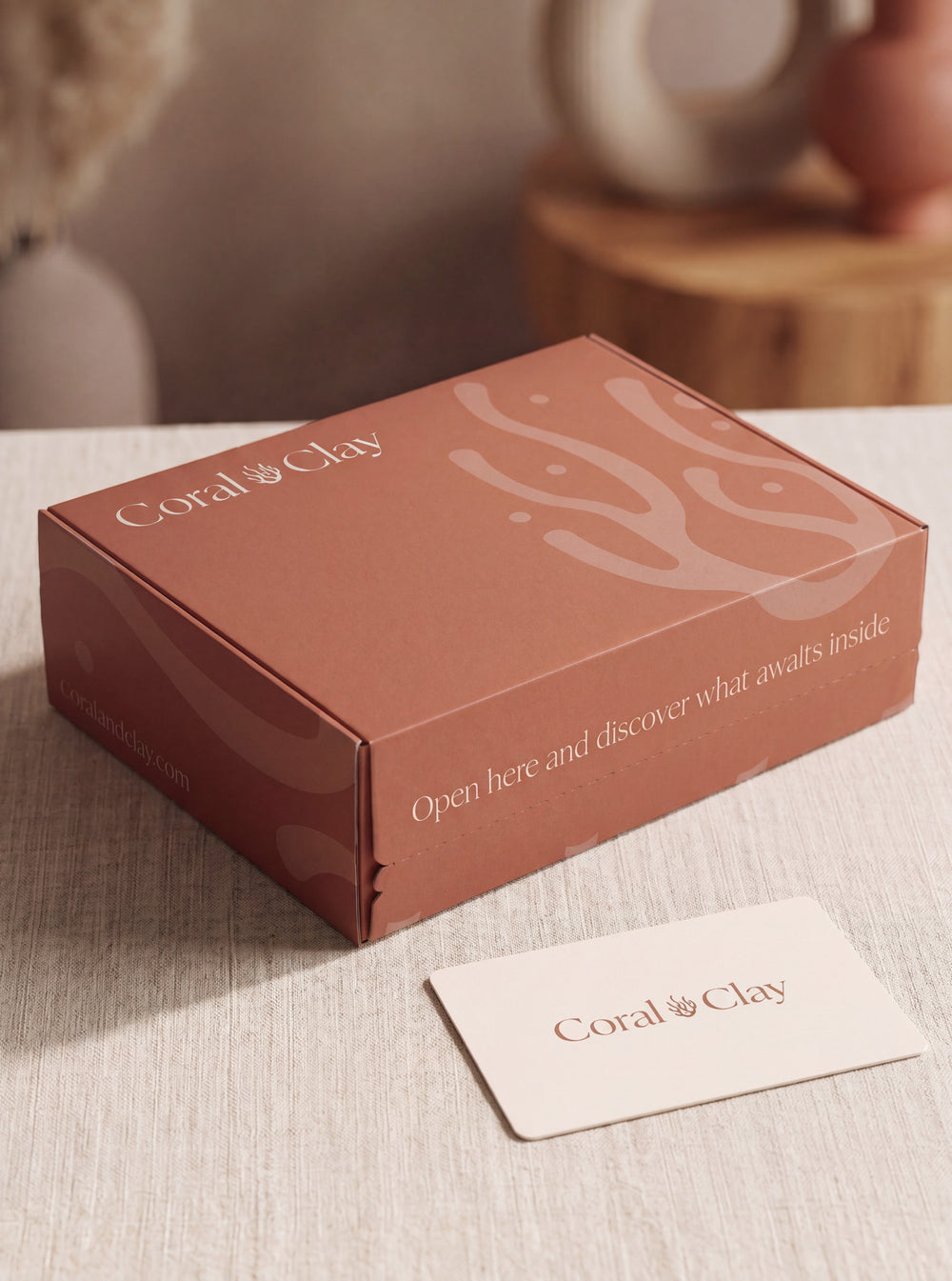
A digital packaging mock-up helps stakeholders review the direction, but it is not a physical sample. A physical sample of fully custom-branded packaging is exceptional rather than routine and should not appear in the project plan unless feasibility, cost and timing have been confirmed in writing for that programme. Read more about current options for branded gift boxes.
Choose the delivery model before collecting addresses
Consolidated office delivery is easier to administer but needs a named receiver, receiving hours, storage space and a distribution plan. Individual delivery suits remote or distributed teams, but it adds recipient-data deadlines, address validation, multiple delivery routes and exceptions. A mixed programme needs a clear rule for who belongs to each route.
For home delivery, collect only data required for the stated purpose, limit access and agree when records will be corrected or removed. The European Data Protection Board explains that organisations should process only the personal data necessary for each specific purpose. See its data-protection-by-design guidance. Our address-collection checklist turns that principle into practical project steps.
For several EU destinations, confirm each country, product mix and route before approval. Food, alcohol, carrier services, address formats, delivery timing and tax treatment may differ. Coral & Clay supports corporate delivery within EU member states, subject to project-specific confirmation; the UK, US and other non-EU destinations are outside the current scope.
Prepare one approval pack
Bring the final decisions into one short pack before production begins:
- approved concept and permitted alternatives;
- quantity by delivery route and destination;
- final artwork, card copy and brand assets;
- confirmed product and substitution rules;
- recipient-data owner, transfer method and freeze date;
- delivery window, local contacts and exception process;
- commercial approval and the person authorised to accept changes.
This prevents a late comment on a card, logo or recipient list from reopening decisions that suppliers have already acted on.
Final planning checklist
- The audience and purpose are explicit.
- The all-in budget and tax-review owner are confirmed.
- The delivery model and countries are within scope.
- The brief contains preferences, exclusions and approval dates.
- Concepts are compared on recipient fit, quality, presentation, delivery and total cost.
- Variants solve known needs rather than creating unnecessary choice.
- Products, substitutions, artwork and card copy are approved in writing.
- Recipient data has an owner, controlled access and a freeze date.
- Production, packing and delivery include a realistic buffer.
- One person can give the final decision.
Coral & Clay creates custom corporate Christmas gift concepts around the audience, budget, brand and delivery plan. To turn your brief into practical options, request a corporate Christmas proposal with the quantity, recipient group, branding needs, destination countries and desired arrival window.