A good employee appreciation message answers four questions: what did the person do, what changed because of it, what quality did you value and why are you saying thank you now? If those details are clear, the message can be three sentences long and still feel personal.
This guide is for managers, People teams and colleagues who want useful wording without turning recognition into a performance speech. The examples are starting points. Replace every bracketed phrase with something the recipient would recognise as true.
The four-part structure
| Part | Question to answer | Example |
|---|---|---|
| Contribution | What did the person actually do? | You reorganised the client handover when the schedule changed. |
| Impact | Who or what did it help? | Each team knew its next step and the client received one clear update. |
| Quality | What did you value in their approach? | I appreciated your calm judgement and careful communication. |
| Timing | Why mention it now? | Thank you for making a difficult week easier to navigate. |
Put together, that becomes: Thank you for reorganising the client handover when the schedule changed. Your update gave each team a clear next step and meant the client heard one consistent story. I appreciated your calm judgement and careful communication during a difficult week.
Choose the right thing to recognise
Specific appreciation is based on observable work, not a flattering label. You can recognise:
- A result: a deadline met, a problem solved or a customer need handled well.
- A behaviour: sharing knowledge, raising a risk early or making space for other voices.
- Judgement: choosing the right priority, simplifying a decision or protecting quality under pressure.
- Progress: learning a process, applying feedback or becoming more confident in a responsibility.
- Steady contribution: reliable work that is valuable precisely because it prevents disruption.
Avoid praising permanent overwork, availability outside agreed hours or silence about an unreasonable workload. Appreciation should not turn an unhealthy exception into the expected standard.
Employee appreciation message examples
For strong project work
Thank you for taking ownership of [part of the project]. Your [specific action] meant that [team, client or outcome] could [specific effect]. I especially valued the way you [quality in their approach].
For helping a colleague
Thank you for making time to help [name or team] with [situation]. You explained the issue clearly and gave them enough context to continue independently. That was generous, practical support.
For work behind the scenes
I want to recognise the work you did on [process or responsibility]. It was not highly visible, but it prevented [problem] and made [outcome] much easier for everyone relying on it. Thank you for being so thorough.
For spotting a risk early
Thank you for raising [risk] before it became a larger issue. You brought the right evidence, proposed a workable next step and gave us time to decide properly. I appreciated both your attention and your judgement.
For improving a process
Your change to [process] has made [task] clearer and reduced [delay, rework or confusion]. Thank you for noticing the friction and staying with the detail until the new approach worked.
For thoughtful client or customer work
Thank you for the way you handled [client situation]. You listened carefully, set a realistic expectation and followed through on [commitment]. That protected the relationship without promising more than we could deliver.
For learning quickly
You have made real progress with [skill or responsibility] over the past [period]. The way you applied feedback to [example] was especially noticeable. Thank you for approaching the learning with such care.
For cross-team collaboration
Thank you for bringing [teams] together around [decision or project]. You made the trade-offs clear, invited the right input and kept the group focused on the shared outcome. That made the collaboration much more useful.
For calm work during a demanding period
Thank you for the clarity you brought to [specific challenge]. You kept people informed, named what could wait and asked for support when it was needed. Your approach helped the team move through the pressure without adding confusion.
For a remote or hybrid colleague
Thank you for [specific contribution]. Your concise updates and dependable follow-through kept [project or team] connected across locations. I appreciate the consistency you bring to our work together.
For a manager or team lead
Thank you for the way you led [situation]. You gave the team room to decide while remaining available when we needed direction. That balance helped us [result] and made responsibility feel genuinely shared.
For everyday reliability
I appreciate how consistently you [recurring contribution]. It means [specific impact] and gives the people around you confidence that [outcome]. Thank you for the care you bring to this work.
Turn a generic message into a credible one
| Too general | More specific |
|---|---|
| Great job on the presentation. | Your opening example made a technical subject easy to follow, and your final summary gave the client a clear decision. |
| Thanks for always going above and beyond. | Thank you for checking the supplier data before approval. You found two errors early and saved the team a rushed correction later. |
| You are a real team player. | You shared your planning template with the new team and talked them through the assumptions. That helped them start with confidence. |
| We could not do this without you. | Your weekly stock check gives purchasing the information it needs to act before a shortage affects an order. |
Specific wording is also easier to keep proportionate. You do not need superlatives when the contribution and its effect are clear.
Use the right channel
| Channel | Best when | Check first |
|---|---|---|
| Private message | The detail matters more than visibility | Give enough context that it does not feel automatic |
| Team meeting | The contribution helped the group | Confirm that the person is comfortable with public recognition |
| Company channel | The example reinforces a useful shared standard | Remove confidential or personal information |
| Handwritten card | The moment is personal, significant or accompanied by a gift | Check the preferred name, spelling, date and sender |
| One-to-one conversation | Tone and nuance are important | Follow up in writing if the recipient may want to keep the message |
Do not assume that public praise is the higher form of recognition. A thoughtful private note can be more appropriate, especially when the work involved confidential information or the recipient dislikes being placed in the spotlight.
Keep recognition fair without making every message identical
Fairness comes from a visible standard and consistent attention, not from copying the same sentence to everyone. For a team or programme:
- recognise outcomes, judgement and helpful behaviours rather than popularity;
- include operational, part-time, remote and behind-the-scenes roles;
- keep appreciation separate from performance ratings, pay and promotion promises;
- review who has been recognised so quieter work is not repeatedly missed;
- let managers write the final message in their own voice;
- offer private recognition when a public channel is not suitable.
What research can and cannot tell you
A 2026 preregistered field experiment with more than 5,500 crowdworkers tested short automated recognition and appreciation phrases. The messages improved reported job satisfaction, but did not produce comparable gains in motivation or performance. The setting was one-off online work, so it should not be treated as a rule for every workplace. It does show the limits of expecting generic automated praise to operate as a performance tool. Read the original open-access study.
The practical conclusion is modest: write appreciation to acknowledge a real person and a real contribution. Do not use it as a substitute for useful feedback, fair workload, development, pay or good management.
When a gift is appropriate
Write the message first. Then decide whether a gift adds something useful to the moment. A small gesture can support a project thank-you; a significant milestone or repeatable programme may need a clearer budget, eligibility rule and delivery process.
For selection guidance, see Employee Appreciation Gifts: A Practical Guide for Teams. If you are building a recurring programme, the employee appreciation programme guide covers fairness and planning. Those pages address gift choice and programme design; this article remains focused on the message.
Final check before you send
- Could the wording only apply to this recipient?
- Does it name a real contribution, decision or behaviour?
- Does it explain the effect without exaggeration?
- Does it sound like the person signing it?
- Is the channel comfortable for the recipient?
- Have confidential details and comparisons been removed?
- Are the preferred name, role, project and date correct?
- Is the thanks separate from a promise about pay, promotion or performance?
Plan an employee gifting moment
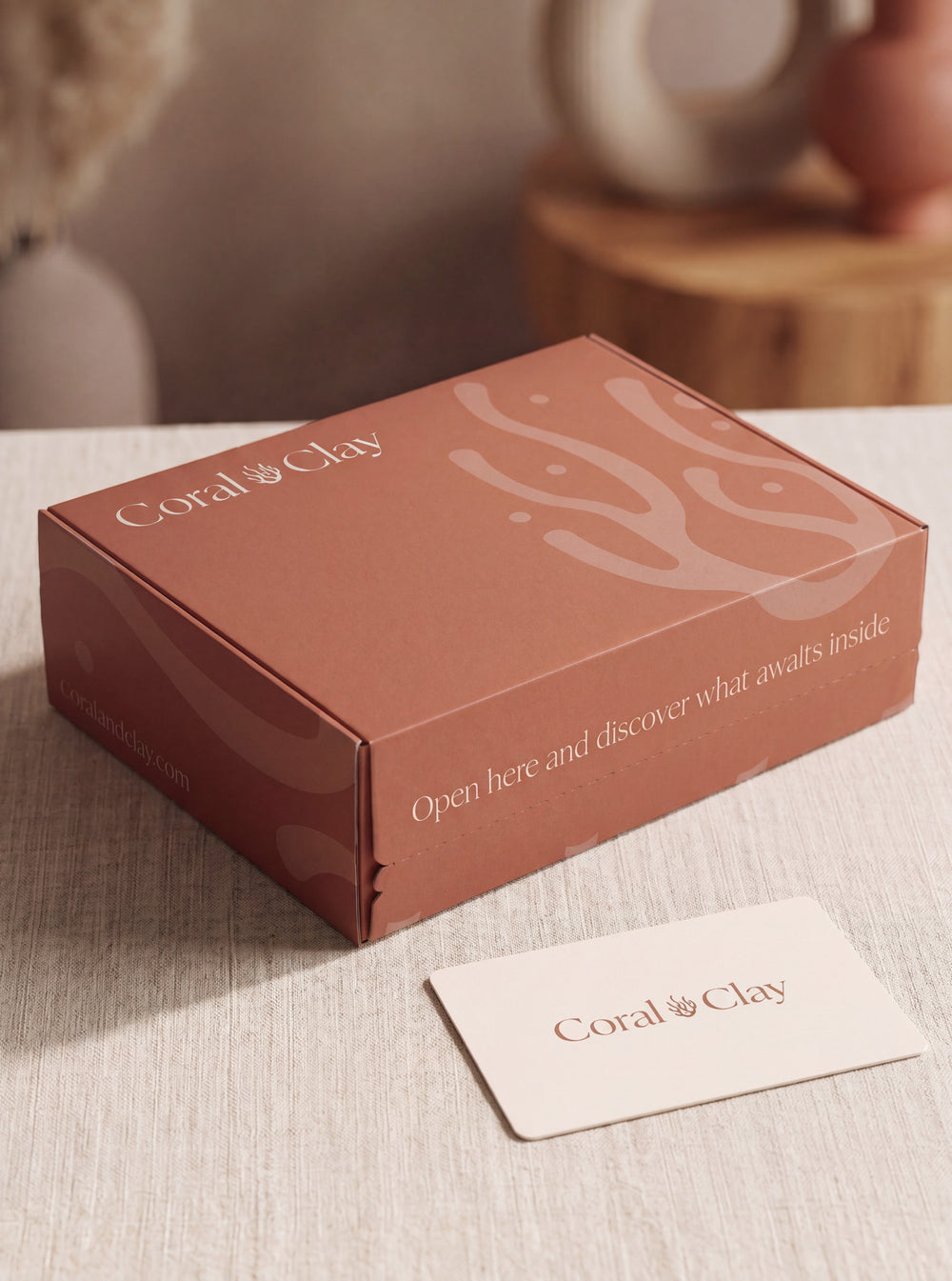
Coral & Clay creates corporate gift concepts around the audience, occasion, budget, brand and delivery requirements. When a considered gift should accompany the message, request an employee-gifting proposal with the occasion, quantity, budget, timing, branding needs and EU destinations so feasibility can be confirmed.