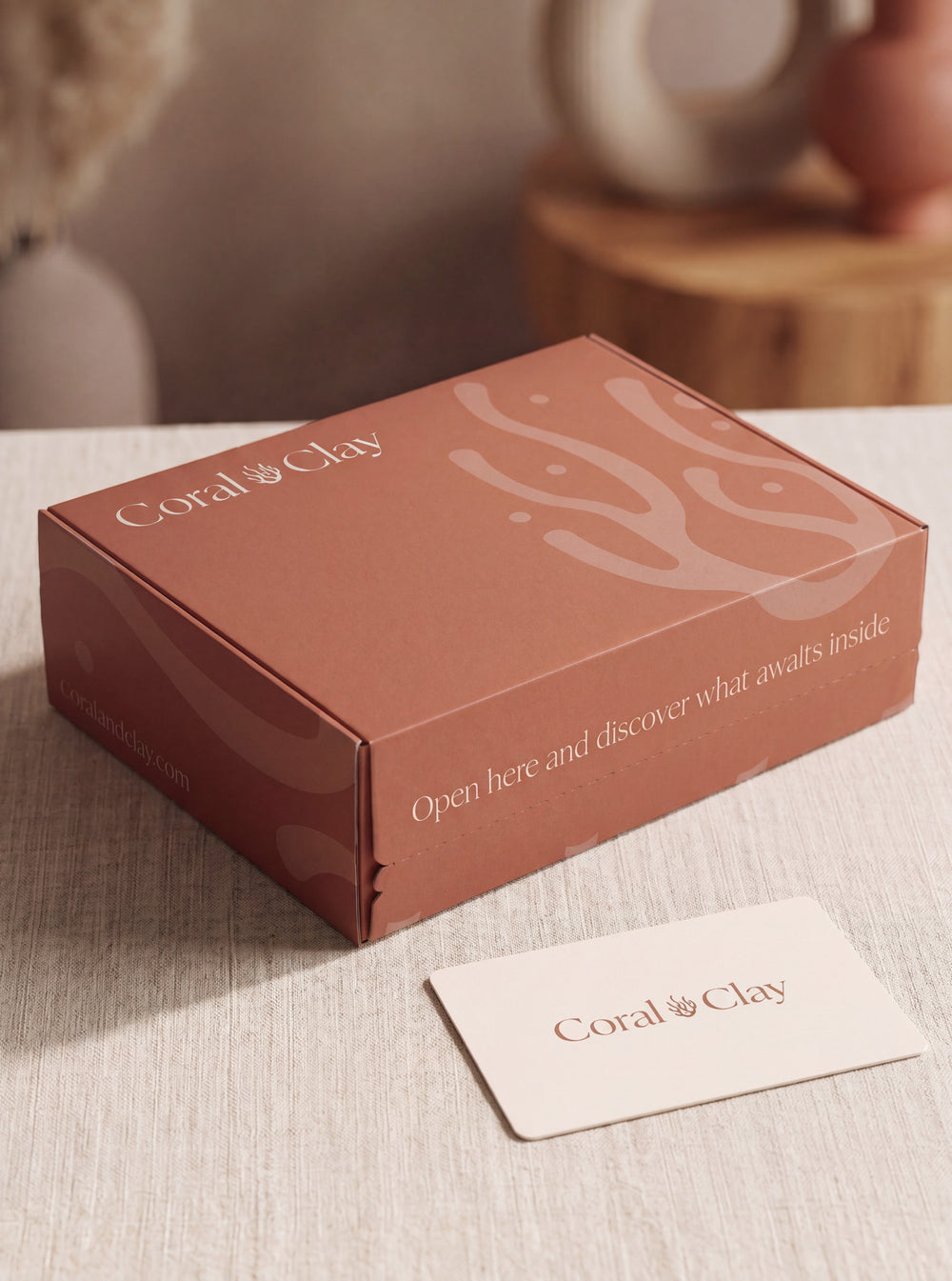
A branded gift-box quote is shaped by more than the box itself. The main variables are the structure, packed dimensions, quantity, print method, finishes, inserts, artwork, assembly, storage and delivery. Product choice and timing sit underneath all of them.
The most reliable way to compare proposals is to give every supplier the same brief and compare the complete delivered project cost. A low box price can become an expensive project once design, packing or multi-address delivery is added.
Start by fixing the scope
Before you compare a unit price, define what one finished gift includes. Ask whether each proposal covers:
- the presentation box and any sleeve, label or belly band;
- printing inside, outside or both;
- an insert, dividers, tissue and filler;
- the products and any branded merchandise;
- a greeting card, individual message or printed insert;
- design, artwork preparation and technical preflight;
- proofs or samples;
- assembly, packing and quality control;
- shipping protection, storage and delivery;
- VAT, other taxes and stated assumptions.
Two quotes are not comparable when one prices a flat-packed box and the other prices a complete gift that is assembled, packed and delivered.
1. Box structure changes material, labour and freight
A standard presentation box with a branded card or label usually has fewer setup steps than a fully printed structure. A printed sleeve gives more brand presence while keeping the underlying box standard. A rigid box may feel substantial, but it arrives assembled and uses more storage and transport space. A completely new structure can add structural design, tooling, prototypes and testing.
Choose the simplest structure that still protects the contents and creates the intended opening experience. Complexity should solve a real problem, not merely decorate the quote.
2. Packed dimensions affect the whole project
Fix the contents before finalising the box size. A few centimetres can change board use, insert size, units per outer carton, storage volume, parcel category and carrier price. Oversized packaging also needs more filler; undersized packaging can crush products or make the presentation feel cramped.
Ask for a packed prototype or a reliable dimensional check, not only an empty-box measurement. Weight, fragile products, upright bottles and temperature-sensitive contents can all change the protection and delivery plan.
3. Quantity spreads setup costs, but surplus has a cost too
Printing and converting normally involve fixed setup before the first production unit. A larger run shares those costs across more boxes. Fully printed packaging often becomes commercially sensible at approximately 10–20 boxes, depending on the structure, artwork, print process and supplier. This is a planning range, not a fixed minimum or quotation.
Ask for price breaks around the likely quantity, then test the saving against:
- the risk of campaign dates or brand assets becoming outdated;
- the cost of storing unused packaging;
- future assembly and retrieval;
- whether the same dimensions will suit the next product mix.
A lower unit price is not a saving when the surplus will never be used.
4. Print method and coverage affect setup
One-colour artwork, process colour, spot colours, white ink, large solid areas and inside-and-outside printing all create different production requirements. The right method depends on the quantity, material and quality standard.
Colour also needs context. A screen mock-up helps approve placement and hierarchy, but it cannot reproduce the final texture or physical colour perfectly. If exact colour is important, state the reference and proofing requirement in the brief.
5. Finishes should earn their place
Foil, embossing, debossing, spot varnish, lamination, ribbons, magnets and special closures can add materials, tooling, production passes and manual handling. They may also affect how easily materials can be separated.
Use a finish when it strengthens the brand hierarchy or the opening experience. One purposeful detail often does more than several effects competing for attention.
6. Inserts must fit the product plan
An insert can secure products and control the reveal, but it is a separate piece of packaging design. Its cost depends on the material, number and shape of cavities, cutting method, print, assembly and the tolerance around each item.
A tightly fitted insert creates risk when products may be substituted. If flexibility matters, compare a modular insert, dividers or a tissue-and-filler arrangement. The right answer depends on how stable the contents are.
7. Design, artwork and proofing may be separate lines
Clarify who supplies the vector logo, copy, translations, layout on the dieline, colour references and any separate layers for white ink, foil or varnish. A production quote that assumes print-ready artwork does not automatically include concept development or repeated technical correction.
For the handoff between design and production, use our custom printed gift-box artwork guide.
Proofs answer different questions. A digital proof checks copy and placement; an assembled visual checks the layout; an unbranded structural sample checks construction. A physical custom-branded sample is exceptional rather than routine because one unit can require much of the setup of a full run. For a sufficiently large prospective project, one may sometimes be considered at a substantial project-specific cost, but availability, timing and commercial treatment need written confirmation.
8. Assembly is part of the price
Flat packaging can look inexpensive until someone has to form every box, fit inserts, fold tissue, place products, add messages, close sleeves, check the presentation and add shipping protection.
Ask who performs each step and how quality is checked. A closure that adds 30 seconds sounds minor until it is repeated across hundreds of gifts.
9. Storage and delivery belong in the comparison
Compare the packed route, not just the packaging invoice. Storage needs depend on whether boxes arrive flat or assembled. Delivery cost depends on packed dimensions, weight, destination count, service level, event receiving rules and failed-delivery handling.
Price the actual model: one bulk delivery, several offices, individual home addresses or an event venue. Coral & Clay supports corporate delivery to EU member states, subject to confirmation of feasibility, timing and cost for the project. Delivery outside the EU is not part of the standard scope.
10. Timing changes which options remain realistic
Branded packaging normally needs approximately two weeks of production after design approval. Add time for the brief, concepts, sourcing, artwork, approval, packing and delivery. Treat that production period as a planning norm rather than a guarantee.
Late artwork or recipient data can remove economical options even when the packaging itself is available. Plan backwards from the date the gifts must arrive; our corporate gift lead-time guide shows the full sequence.
Account for current packaging rules
Regulation (EU) 2025/40 on packaging and packaging waste applies from 12 August 2026. It introduces requirements across packaging production, use and waste management, with individual obligations and transition dates varying. Review the official EUR-Lex text and ask which requirements apply to the exact packaging, legal role and destination. This is general information, not legal advice.
Request specific evidence for material, composition, labelling or recyclability claims. Do not treat a broad sustainability label as a substitute for facts about the complete configuration.
Illustrative comparison: 20 boxes and 100 boxes
This is an illustrative scenario, not a client quotation. For 20 gifts, a standard presentation box with a well-designed sleeve and card may preserve more budget for the contents. At 100 gifts, fixed artwork and production setup can be spread across more units, so fully printed packaging may become more proportionate.
Ask for both routes using the same products, packed dimensions, assembly work and delivery model. Otherwise the apparently cheaper packaging option may create higher costs elsewhere.
Decision-ready quote checklist
- Every proposal covers the same finished scope.
- Contents, packed dimensions and weight are confirmed.
- Quantity breaks include surplus and storage risk.
- Print method, colour expectation and finishes are explicit.
- The insert can tolerate the agreed substitution plan.
- Design, artwork, proofs and revision assumptions are listed.
- Assembly, quality control and shipping protection are included.
- Delivery routes and failed-delivery handling are priced.
- Production timing starts from a stated approval point.
- Packaging compliance responsibilities are identified.
- The comparison uses complete delivered cost.
Build the quote around the real project
We develop branded gift-box proposals around the audience, products, structure, artwork, quantity, packing and EU delivery plan. Request a branded gift-box proposal.