A fair work-anniversary programme starts with the policy, not the gift. Define which service date counts, which milestones you recognise, what happens after leave or re-employment, and who owns each decision. Then give every eligible employee the same level of recognition while allowing a small number of genuinely useful choices.
The gift itself should support a specific message about the employee's contribution. A consistent process makes that message more credible and prevents managers, locations or job levels from receiving very different treatment by accident.
Decide what the programme is for
Write one sentence that explains the purpose. For example: We recognise completed service milestones to thank employees for their contribution and mark their shared history with the organisation.
This keeps the programme separate from performance bonuses, promotions and informal manager gifts. If the real purpose is to reward exceptional work, use a performance-recognition process instead. A work anniversary should not become a hidden performance rating.
Publish the service-date rules before choosing gifts
The difficult questions are usually about eligibility rather than products. Agree the rules with HR, payroll and the relevant employee-representative or legal advisers before announcing the programme.
| Decision | Rule to document | Why it matters |
|---|---|---|
| Qualifying date | Original start date, continuous-service date or another recorded date | Different systems may hold different dates. |
| Recognised milestones | For example 1, 5, 10 and 15 years, or a structure that suits workforce tenure | Managers should not invent milestones case by case. |
| Leave | How statutory, parental, sickness and unpaid leave affect service calculations | Do not let a gift workflow make its own employment-policy decision. |
| Re-employment | Whether earlier service is restored after a break and under what conditions | “Boomerang” employees otherwise receive inconsistent answers. |
| Transfers and acquisitions | How service is treated after an internal transfer, merger or acquisition | Payroll and local records may not show the full history. |
| Worker groups | How fixed-term, part-time, agency, intern and contractor populations are treated | Scope needs an objective reason and a named owner. |
In the Netherlands, equal-treatment rules cover work and employment conditions, including protected grounds such as contract type and working hours. That does not determine one universal anniversary policy, but it is a reason to review eligibility criteria for direct and indirect unequal effects. The Netherlands Institute for Human Rights explains the protected grounds and areas it can assess. This article is general programme guidance, not employment or legal advice.
Use a milestone ladder, not manager discretion
A practical ladder changes the depth of recognition as service increases without turning every anniversary into a separate procurement exercise.
| Milestone level | Recognition format | Useful design principle |
|---|---|---|
| Early milestone | Specific message and modest shared gift format | Make the process warm but operationally light. |
| Established milestone | Higher-value gift or controlled choice, plus manager message | Connect the message to real contributions and team history. |
| Significant milestone | More individual curation or a small set of considered routes | Gather preferences discreetly and allow more planning time. |
| Exceptional tenure | Leadership involvement and a lasting, recipient-relevant gift | Avoid simply adding more unrelated products. |
Set a total budget for each level that includes the gift, packaging, message, branding, tax treatment and delivery. Keep any financial or tax assessment with Finance or a qualified adviser. Do not ask managers to top up the official value privately; that creates a second, unequal programme.
Offer limited choice where it solves a real need
One gift may work for a small, similar team. Across a larger workforce, two or three equal routes are often fairer and easier to manage. Useful differences include:
- food-led and non-food concepts;
- alcohol-free and fragrance-free routes;
- a compact home-delivery option and a presentation format for an office celebration;
- a locally appropriate language version;
- individual curation for only the highest milestone level.
Keep the perceived care, presentation and approved value comparable. Avoid “standard” and “special” labels, and do not segment by gender, age or assumed family situation. Our guide to personalising corporate gifts at scale explains how to control variants without creating hundreds of one-off boxes.
Make the message specific
The card or conversation often carries more meaning than the product. Give the manager a short prompt and a real deadline:
- Name the milestone and thank the employee.
- Mention one genuine contribution, behaviour or shared moment.
- Explain who benefited or why it mattered.
- Close with an appropriate wish from named people.
For example: Thank you for five years with the team. Your calm coordination during the office move helped colleagues settle quickly and kept the client launch on track. We appreciate the care you bring to complex work.
Avoid generic claims about loyalty or treating long service as proof that someone should keep working in the same way. Recognition should acknowledge a completed contribution, not create an obligation.
Build a 90-day operating rhythm
Start each cycle far enough ahead to resolve disputed dates, gather preferences and plan delivery.
- 90 days before: HR exports the next milestone list and checks service dates.
- 75 days before: the programme owner resolves exceptions and confirms the budget level.
- 60 days before: the employee selects from approved routes where choice is offered.
- 45 days before: the manager submits a specific message and approved spelling.
- 30 days before: products, packaging, language and delivery model are frozen.
- After delivery: completion and any return are recorded without storing unnecessary preference details.
Adjust these timings to the actual concept and supplier confirmation. Custom products, printed packaging or delivery to several EU member states can need more time than an available gift sent to one office.
Collect only the data the programme needs
A milestone programme may need a name, qualifying date, preferred language, approved gift route, message and delivery details. It rarely needs a broad profile of hobbies, health or household circumstances.
Use one controlled list with a named owner, restricted access and a deletion rule for temporary working files. The European Data Protection Board says personal data should be necessary and proportionate for the purpose, accurate, kept only as long as needed and processed securely. See its data-protection basics.
Ask for a home address only when individual delivery is chosen, and transfer only the fields needed by the fulfilment partner. Never reveal an anniversary in a public channel before checking whether the employee wants it announced.
Handle exceptions through one documented route
Give HR or the programme owner authority to decide exceptions. Typical cases include a missing historical start date, a recent acquisition, a disputed break in service, an employee on leave, a late manager message or a returned parcel.
Record the reason and decision, then use it to improve the policy. Do not solve the same situation differently in each office. If the question touches employment conditions, discrimination, collective agreements, tax or privacy, refer it to the appropriate specialist rather than improvising inside the gift process.
Final programme checklist
- The purpose is separate from performance reward.
- Qualifying dates, milestones and worker scope are documented.
- Leave, re-employment, transfers and acquisitions have rules.
- Each milestone has an approved total budget and recognition format.
- Choices are limited, equivalent and based on genuine needs.
- Managers receive a message prompt and deadline.
- Recipient data has an owner, access controls and deletion rules.
- Exceptions go through one consistent decision route.
- The delivery plan fits office, home and EU-destination requirements.
- The policy is reviewed after each cycle and at least annually.
Turn the policy into a considered employee gift
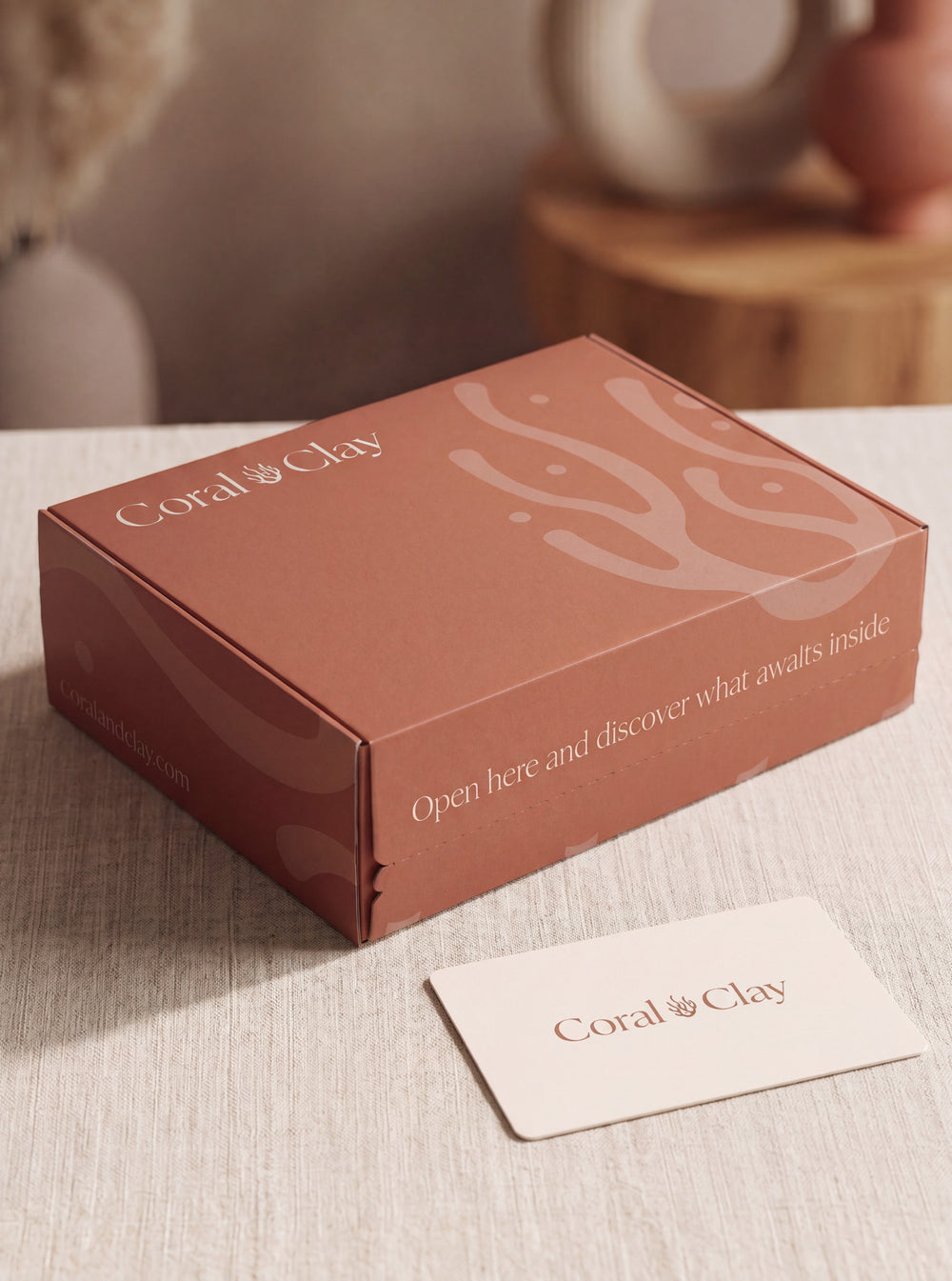
Once the rules are clear, Coral & Clay can develop employee gift-box concepts around the milestone, audience, budget, brand, message and delivery requirements. Request an employee-gift proposal with your milestone structure, quantities, timing, destinations and preferred level of choice.