Choose speaker gifts when the aim is to recognise a specific contribution. Choose attendee giveaways when the aim is to give a useful, consistent item to a broader group. If both objectives matter, use a hybrid plan—but keep the two formats visibly different so a thank-you for a speaker does not feel like standard event merchandise.
The right choice is not simply “fewer expensive gifts” versus “more inexpensive items”. It depends on who the recipient is, what the event team wants the gesture to achieve, how it will be handed over and what happens after the event.
Speaker gifts and attendee giveaways at a glance
| Decision | Speaker gift | Attendee giveaway |
|---|---|---|
| Primary purpose | Thank someone for their time, expertise or contribution. | Give a wider audience a useful event or brand touchpoint. |
| Audience | Named speakers, moderators, hosts or selected contributors. | All attendees or a clearly defined attendee segment. |
| Quantity | Low and known, with a small contingency. | Higher and linked to registrations, expected attendance and the distribution method. |
| Personalisation | Individual name, session or thank-you message can be appropriate. | Usually consistent across recipients; event-level personalisation is more practical. |
| Branding | Subtle and recipient-led. The message should do more work than the logo. | Clear but useful. Branding must not make the product less likely to be kept. |
| Handover | Backstage, in the green room, at a speaker desk or sent after the event. | Registration, seats, a staffed collection point or a planned exit moment. |
| Budget logic | Complete cost per named recipient, including message, packaging and delivery. | Complete unit cost multiplied by the realistic distribution quantity, plus transport and handling. |
| Success signal | Correct, timely delivery and a well-managed thank-you process. | Useful distribution, low leftover volume and evidence that the item suited the audience. |
Start with the job the gift needs to do
Use speaker gifts for recognition
A speaker gift marks a contribution that is not shared by the full audience. The recipient has prepared, travelled, shared expertise or helped hold the event together. That calls for a considered thank-you rather than a larger version of the attendee item.
A strong speaker gift usually has four qualities:
- it is appropriate to the professional relationship and the recipient's gift policy;
- it is easy to carry or delivered to an agreed destination;
- the message refers to the person's actual contribution;
- the brand is present with restraint, rather than dominating the gift.
Use attendee giveaways for reach and utility
An attendee giveaway works at a different scale. It may help people participate in the event, remember a useful idea or take home an item they will genuinely use. The best question is not “what can carry our logo?” but “what will still make sense after the badge comes off?”
For attendee quantities, prioritise portability, straightforward distribution, consistent quality and suitability for the whole intended group. If the item needs a size, an app, a particular device or a personal preference to work, it may create more friction than value.
For a deeper product-selection framework, see our practical guide to premium event giveaways.
A six-question decision framework
- Who has earned individual recognition? Named contributors point towards speaker gifts. A broad, equally situated audience points towards giveaways.
- What should happen after the handover? A thank-you moment, a useful event aid and longer-term brand recall are different objectives. Name one primary outcome.
- Is the audience count reliable? Speaker lists are usually fixed earlier. Attendee numbers can change through late registrations and no-shows, so quantity planning needs a realistic basis.
- Can the product travel? Consider weight, dimensions, liquids, food, breakability and batteries before choosing the item—not after it reaches the venue.
- Can the event team distribute it well? A good item handed out at a congested registration desk can still create a poor experience.
- Does the format fit policy and compliance? Check recipient policies for speaker gifts and product documentation for anything distributed to attendees.
Build the budget from the complete experience
Do not compare only the product price. Use the complete delivered cost for each option.
Speaker-gift budget
Calculate:
selected products + presentation + individual message + branding + packing + delivery + contingency
Because the recipient list is small, the event team can usually invest more time in relevance and presentation. That does not mean the gift must be extravagant. A lower-value gift with an accurate message and smooth handover can feel more appropriate than an expensive, impersonal item.
Attendee-giveaway budget
Calculate:
complete unit cost × planned distribution quantity + venue transport + storage + staffing or set-up + leftover plan
Base the quantity on the chosen distribution model. A giveaway placed on every chair needs a different number from an item available at an optional collection point. Keep a modest operational contingency, but do not order a large speculative surplus without deciding how useful leftovers will be after the event.
Plan the handover before approving the product
Speaker gifts need a named owner. Decide who checks the final speaker list, confirms names and titles, stores the gifts securely and records whether each one was handed over, redirected or sent afterwards. Avoid asking a speaker to carry a bulky package without warning.
Attendee giveaways need a flow plan. Choose one clear moment and make ownership visible:
- At registration: immediate, but adds work at the busiest point.
- On seats: consistent, but requires early venue access and may leave items from no-shows.
- At a staffed point: allows explanation and controlled distribution, but not everyone will visit.
- On departure: avoids carrying during the event, but depends on a well-used exit route.
- After the event: useful for selected recipients, but requires accurate addresses and a clear data process.
Our venue delivery checklist for corporate event gifts covers receiving hours, handover contacts, storage and on-site checks in more detail.
Check safety, traceability and travel constraints
Event merchandise is not exempt from normal product rules because it is free. The EU General Product Safety Regulation covers consumer products made available for payment or free of charge and requires product-safety and traceability controls. Ask the supplier which economic operator is responsible in the EU, what warnings or instructions are required and what documentation supports the product. The European Commission provides a current overview of general product compliance in the EU. This is a procurement prompt, not legal advice.
Travel can narrow the choice further. Power banks and other lithium-battery items are subject to airline baggage rules; liquids, food and fragile items also need destination-specific checks. IATA's current guidance says spare lithium batteries and power banks must be carried in the cabin rather than checked baggage. Review the IATA guidance for travelling with lithium batteries and confirm the rules with the relevant carrier.
When a hybrid approach is better
Many events genuinely need both formats. A hybrid plan can work well when it follows a visible logic:
- attendees receive one useful, easily distributed item;
- speakers receive a separate thank-you with a personal message;
- VIPs or hosts are included only when the selection rule is clear;
- the event team uses different packaging or handover moments to prevent confusion;
- budgets and quantities are tracked as separate workstreams.
Avoid creating many poorly defined tiers. If staff cannot explain in one sentence why each group receives a different format, the plan is probably too complicated.
A real speaker-gifting example
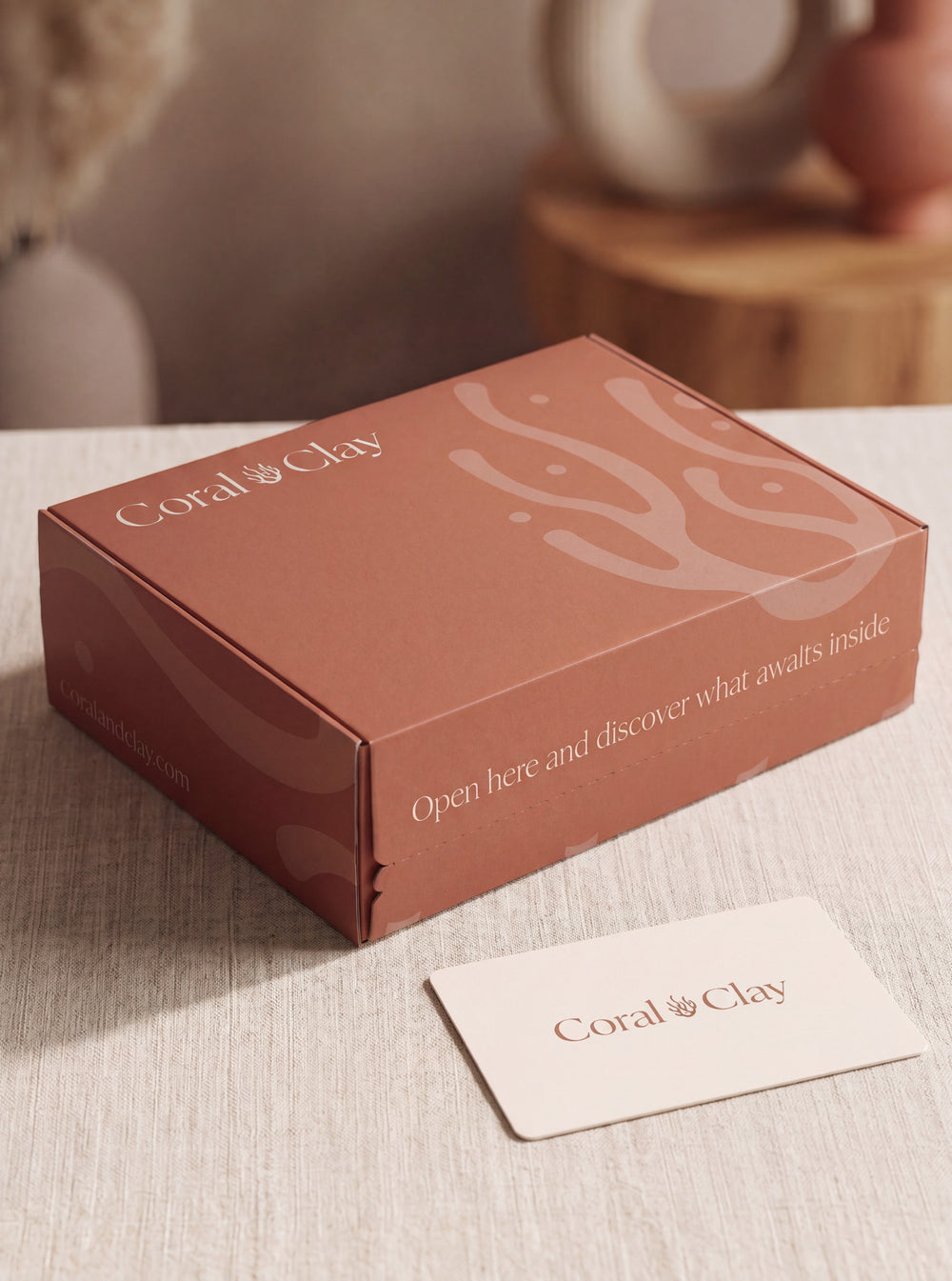
In May and June 2026, software company Qualtrics worked with Coral & Clay on two conference-speaker gifting orders totalling approximately 50 gifts. The same selected contents went to event locations in Amsterdam, Munich and Paris. The Amsterdam order used unbranded packaging; the later Munich and Paris order used fully white-labelled boxes printed inside and out with Qualtrics' colours, logo and message, plus a coordinated greeting card.
The useful lesson is not simply that the later version had more branding. The audience and purpose stayed consistent: named speakers were being thanked. That made it possible to reuse the selected contents while refining the presentation for the later events and consolidating delivery to each venue.
Brief the supplier with these details
- event name, dates, cities and venue receiving requirements;
- speaker count, attendee count and the source of each estimate;
- the primary objective for each recipient group;
- complete budget and whether delivery and tax sit inside it;
- product exclusions, dietary considerations and travel constraints;
- branding assets, message ownership and approval deadline;
- distribution point, on-site owner and leftover plan;
- final-name deadline for speaker personalisation;
- delivery buffer and contingency route if a speaker changes;
- how the team will review usefulness and operational performance afterwards.
Work backwards from the event date before promising a format internally. Our corporate gift lead-time guide separates concept, artwork, production, packing and delivery decisions.
Choose the simplest format that meets the objective
Use speaker gifts when individual recognition is the point. Use attendee giveaways when broad utility and distribution are the point. Use both only when each has a distinct job and the event team can deliver both without compromising the core event experience.
We develop event-gift concepts around the audience, purpose, budget, branding, timing and delivery requirements, with availability and production details confirmed in the proposal. Request a proposal for your event gifts.